
President's Summer Tour 2026
Last week, I was joined by fellow Institute leaders on my fifth President’s Summer Tour, traveling more than 730 miles across Georgia over three days to witness firsthand the Georgia Tech’s impact on communities and industries statewide. The tour took us to 10 towns and 15 events — from Middle Georgia to the North Georgia mountains, including a few stops in metro Atlanta along the way. Across the state’s leading industries — aerospace, agriculture, national defense, mining, and manufacturing — Georgia Tech supplies the skilled workforce, advanced research, and partnerships that are driving our regional economy and strengthening our entire state.
Day One
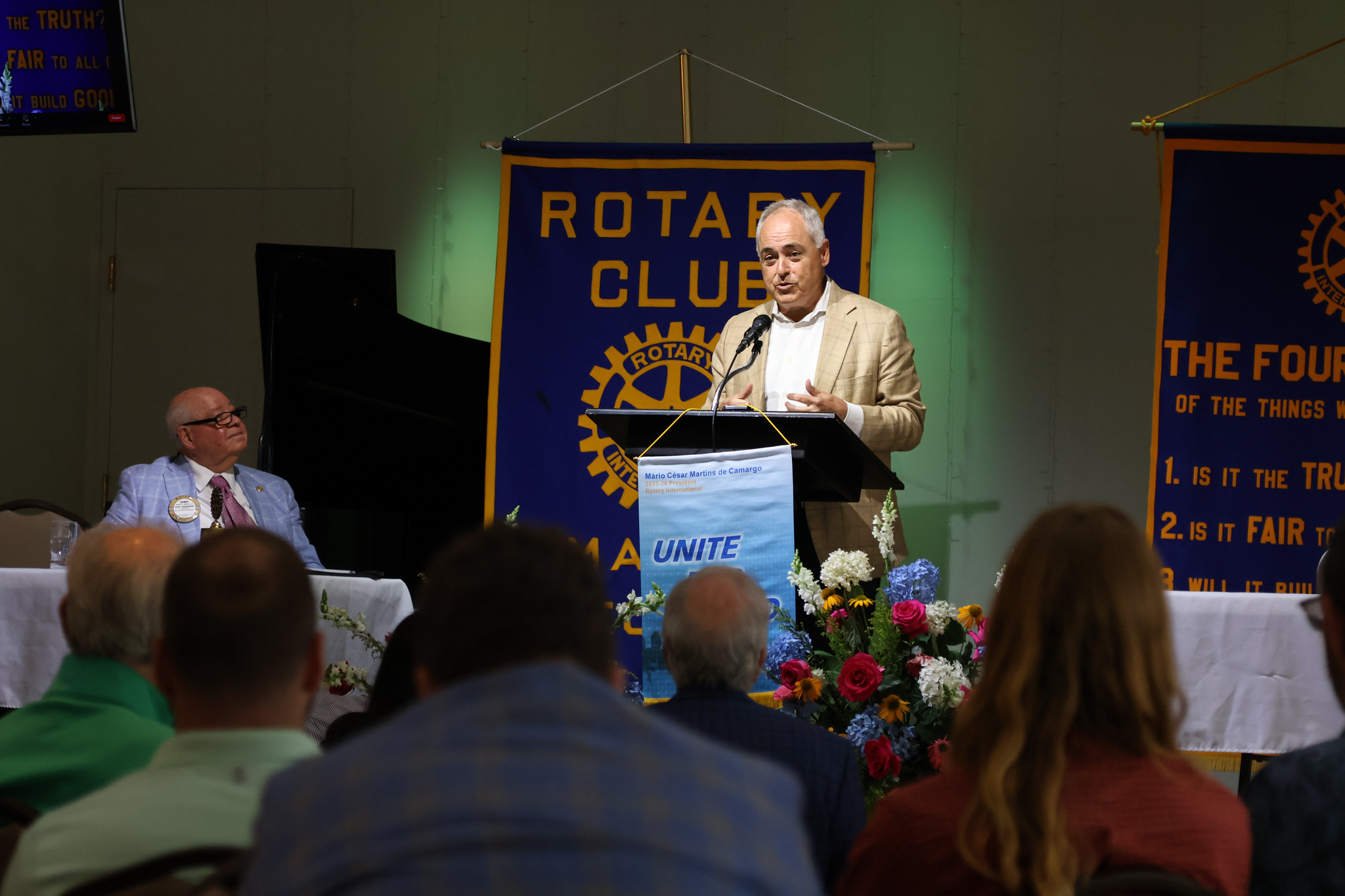
In Macon, we met with government, community, and business leaders, before heading to Warner Robins to visit Robins Air Force Base (AFB), one of Tech’s longtime partners in education, research, and national defense. The base is a major sponsor of the Georgia Tech Research Institute (GTRI) and employs of hundreds of Tech alumni.
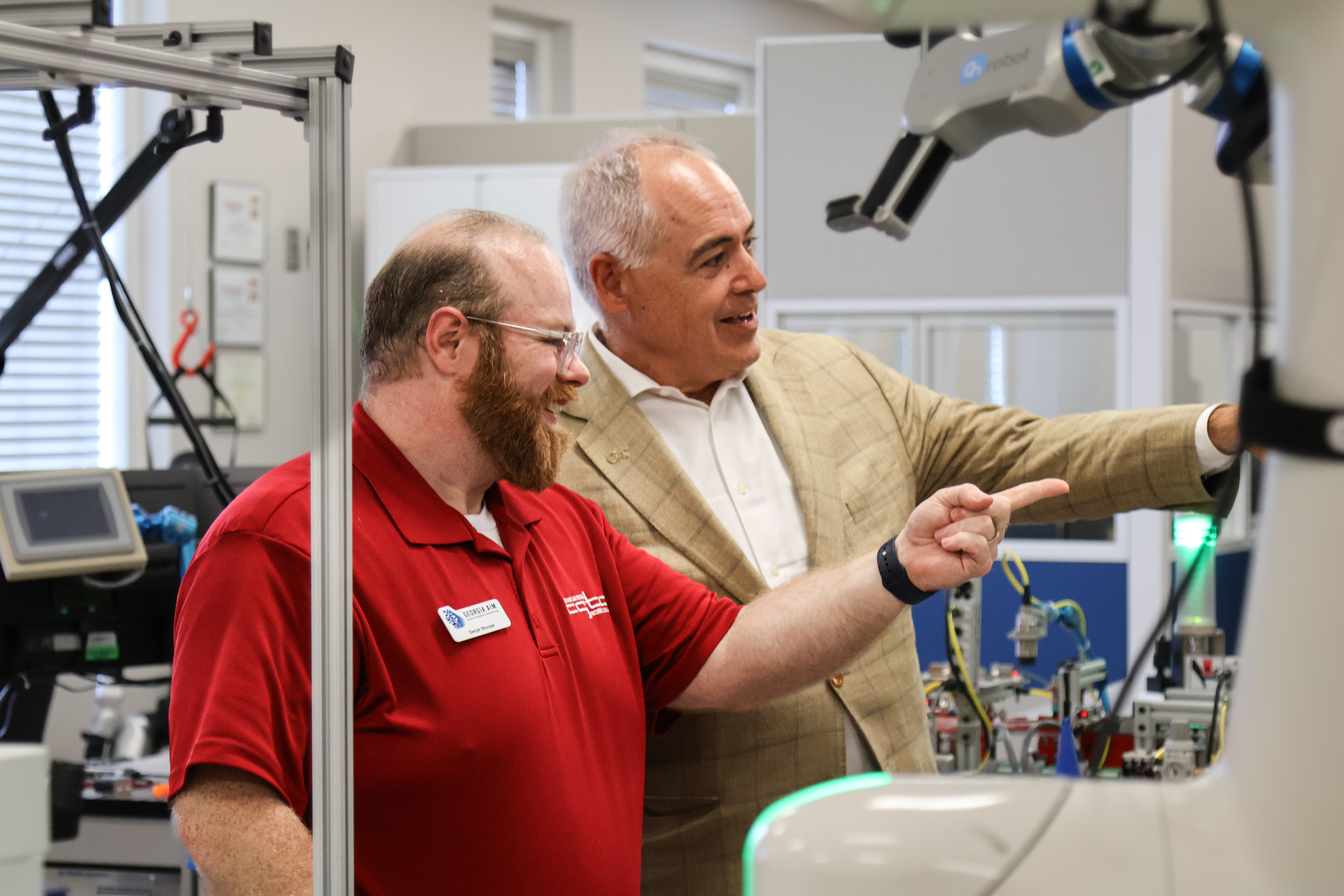
We visited the Georgia Veterans Education Career Transition Resource (VECTR) Center, where we visited the AI-Enhanced Robotic Manufacturing Studio, an advanced training facility that we helped build in partnership with the Georgia Artificial Intelligence Manufacturing (GA-AIM) coalition to provide veterans with invaluable new skills. Graduates of the program, now in its third year, have gone on to work as civilian contractors at Robins Airforce Base or as robotic technicians in the private sector.
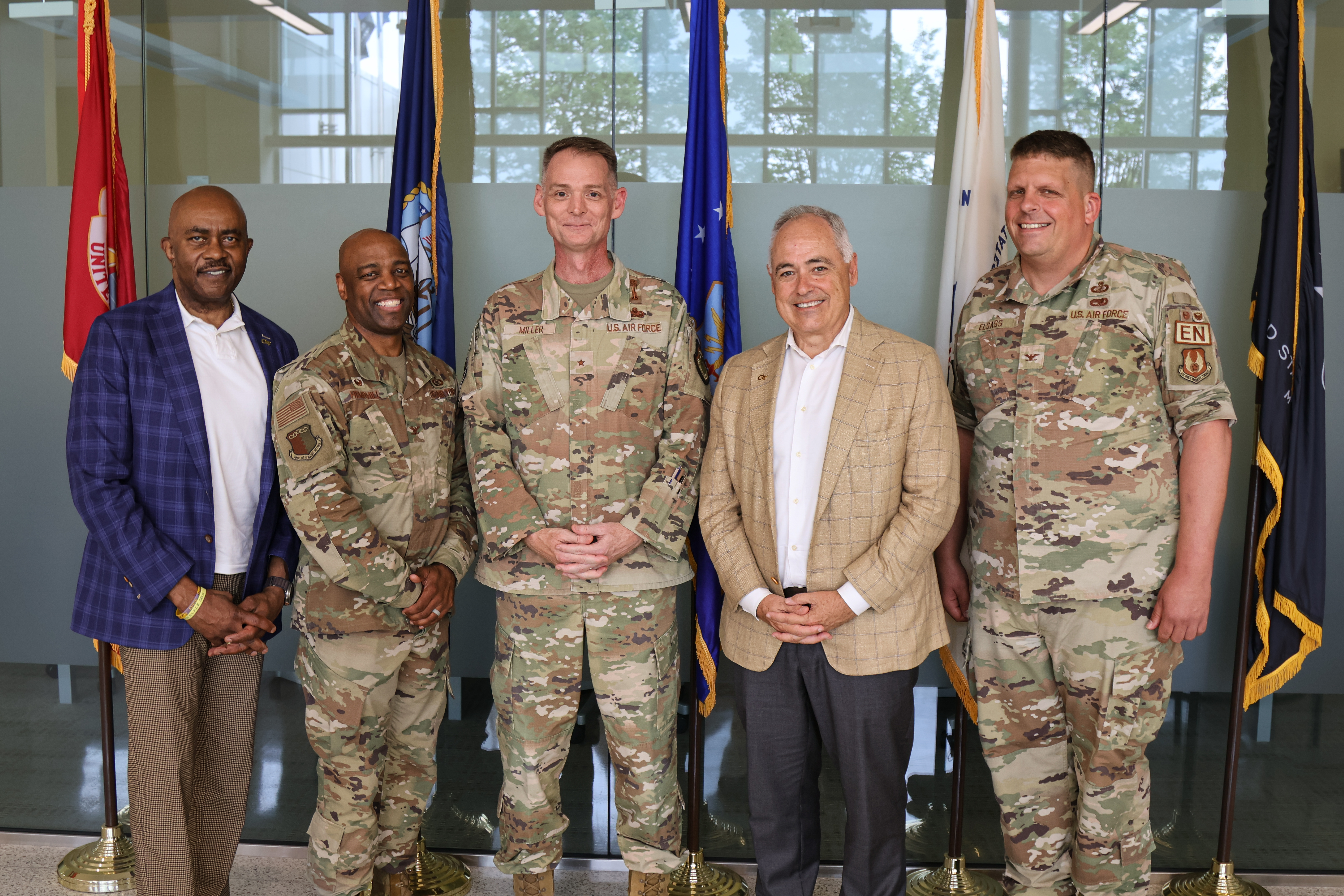
Our Middle Georgia visit highlighted the region’s role as the state’s Aerospace Corridor, home to more than 100 employers — including Embraer, Northrop Grumman, Qarbon Aerospace, Raytheon, Robins AFB, and S&K Aerospace — which together provide more than 30,000 jobs. Throughout the region, it was rewarding to see the enormous impact of our faculty, alumni, and research on the state’s second-largest industry.
Day Two
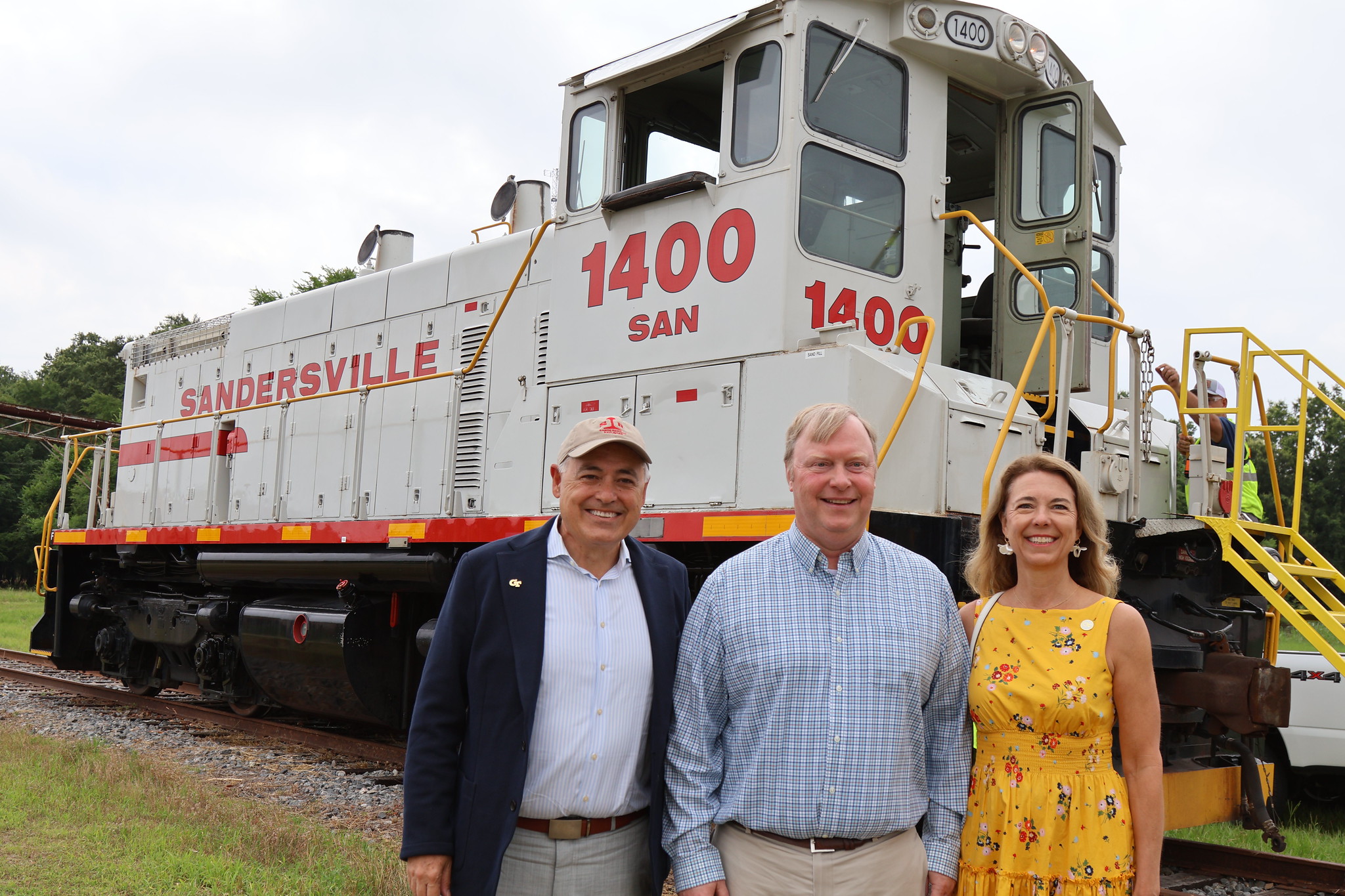
We visited a kaolin mine operated by Thiele Kaolin Company near Sandersville, and we got there by taking a train operated by Sandersville Railroad, a crucial logistics partner for the kaolin industry that’s owned by a proud alumnus, Benjamin Tarbutton III (MGT 1994).
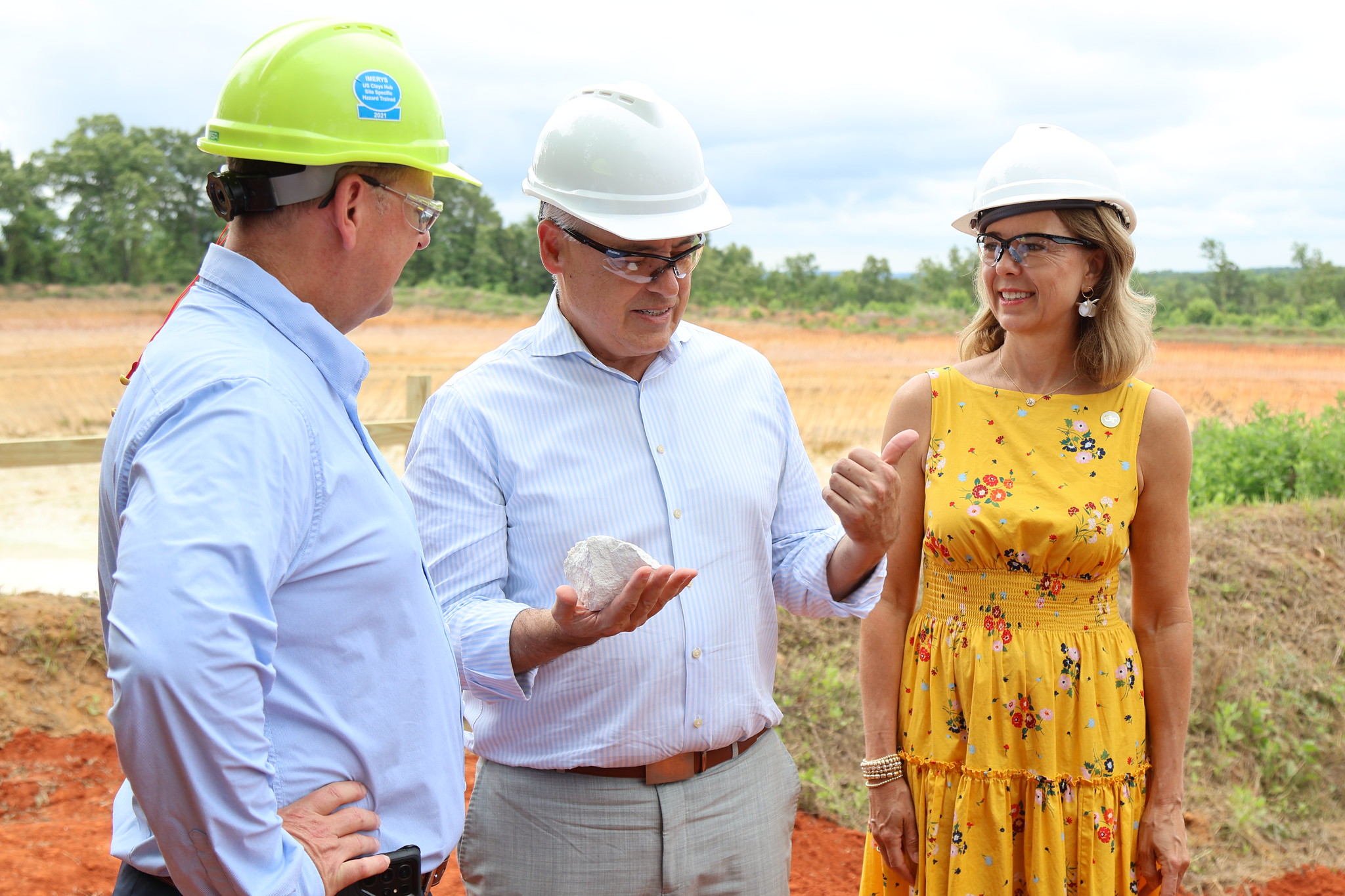
Kaolin is a white clay mineral that happens to be abundant along Georgia’s Fall Line and is a key ingredient in all sorts of goods, from ceramics and cosmetics to paper, packaging, and even medical supplies. The trip highlighted one of Georgia’s most valuable natural resources as well as the work Georgia Tech researchers are doing to investigate economically viable ways to extract heavy rare earth elements as byproducts of kaolin processing.
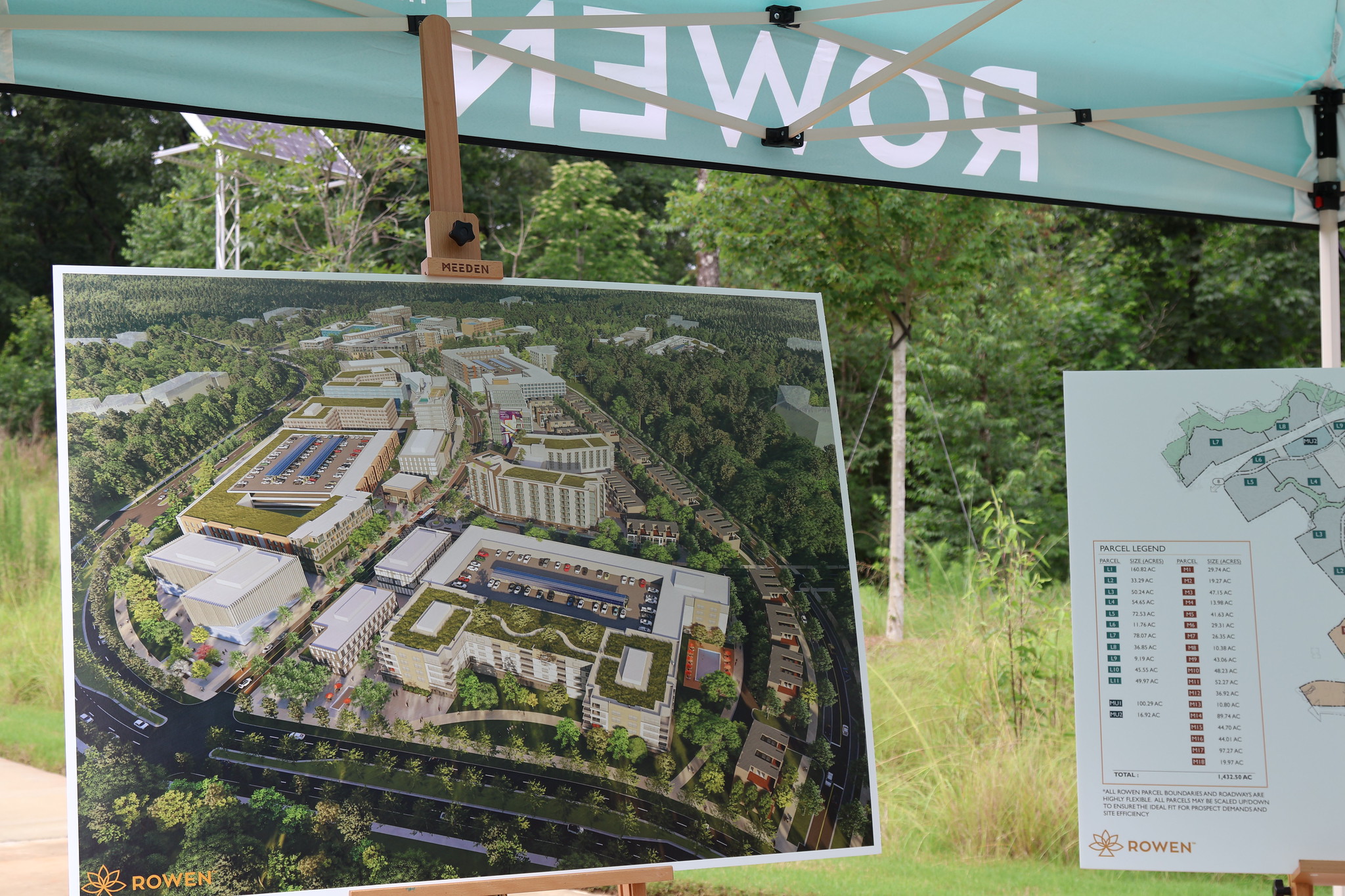
We continued to Dacula in Gwinnett County to meet leaders from UCB, a global biopharmaceutical company that is building a $2 billion biologics manufacturing facility at Rowen, the state’s newest innovation district, which Georgia Tech is supporting.
Day Three
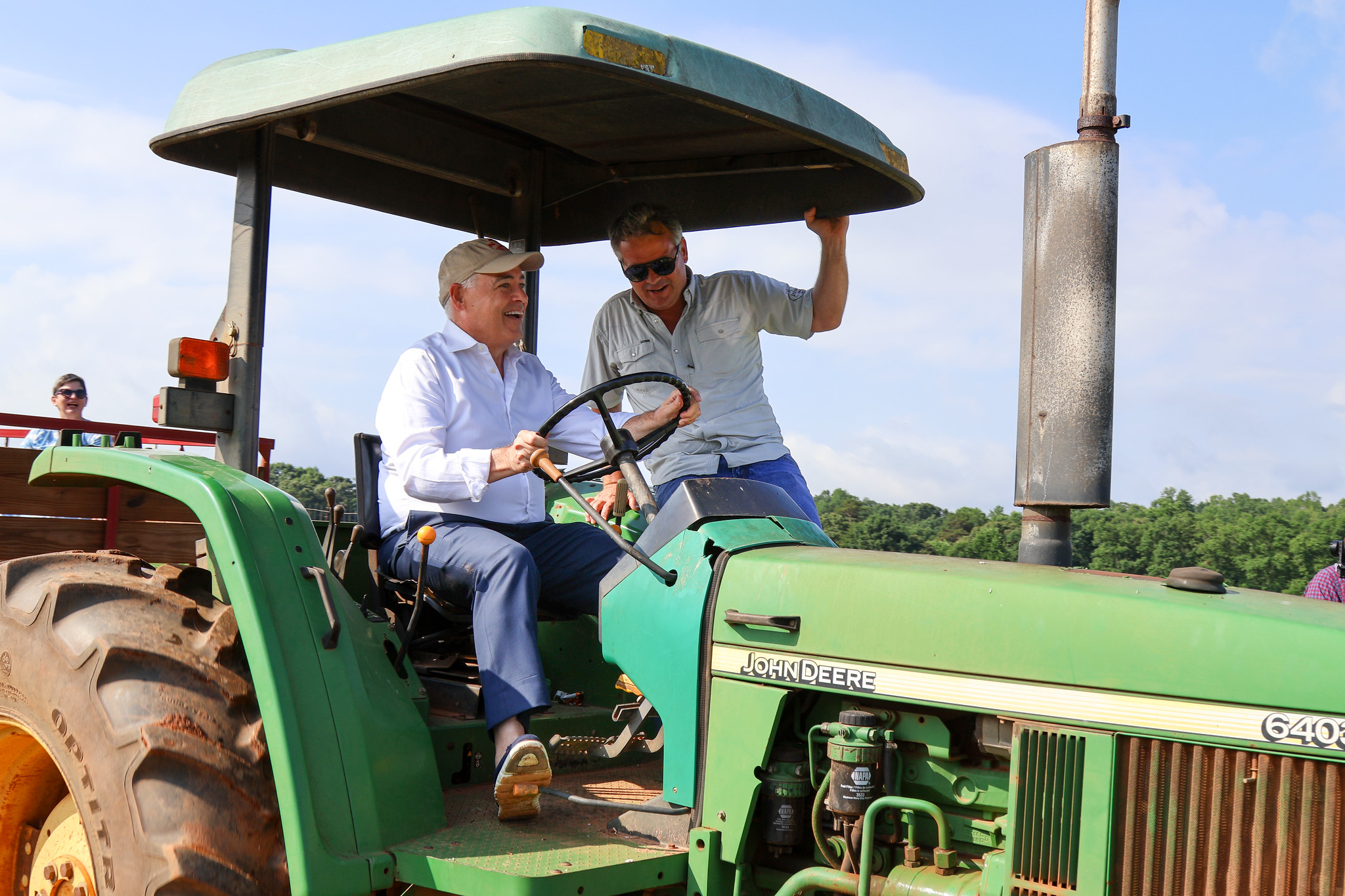
On our last day of our state tour we visited Jaemor Farms in Alto, a sixth-generation, family-run fruit and vegetable farm that’s co-owned by state Sen. Drew Echols. Agriculture is Georgia’s No. 1 industry, and Doug Britton, manager of GTRI’s Agricultural Technology Research Program, came with us to share some of the many ways our applied research and engineering solutions are improving farming operations across our state.

GTRI’s agriculture research spans from sophisticated tools — artificial intelligence and machine learning, automation, nanotechnology, robotics, and more — to simpler solutions, such as the safest and most effective means to prevent deer from ravaging crops — a persistent challenge that costs Georgia farmers hundreds of millions of dollars a year.
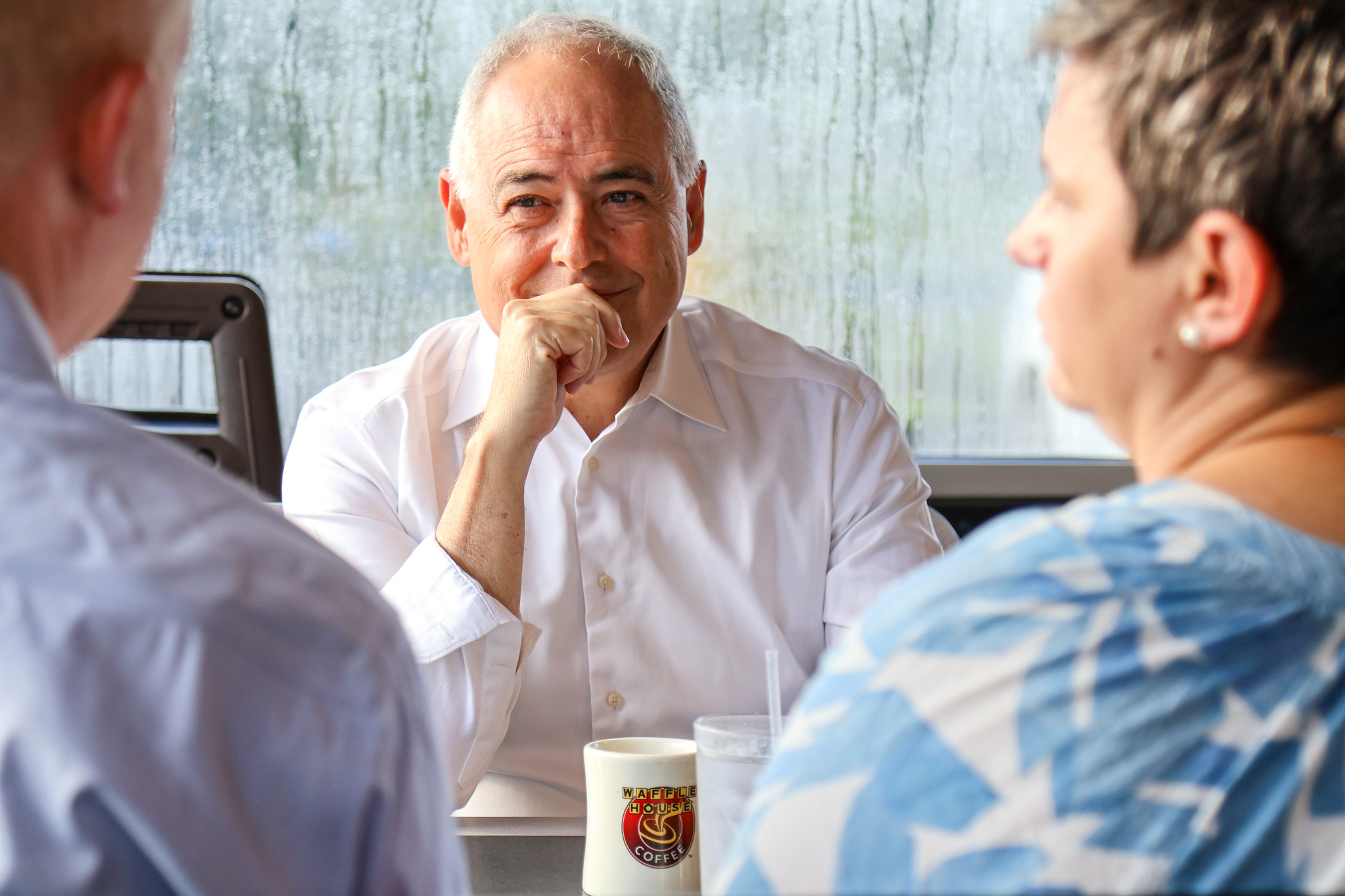
After a quick stop at a Georgia staple, Waffle House, we wrapped our tour with visits to two metro Atlanta aerospace leaders: Lockheed Martin in Marietta and Anduril’s manufacturing and research facility in Atlanta, near Georgia Tech’s main campus. These last two visits again highlighted Georgia Tech’s strong talent pipeline and commitment to mission-driven innovation that are powering the state’s crucial aerospace, national defense, and advanced manufacturing industries.

Across the state, we saw Yellow Jackets strengthening Georgia’s leading industries and small businesses, protecting our troops, addressing critical national challenges, creating jobs, and advancing technologies that fuel our state’s economy and global competitiveness. We also learned new ways we can do more for our state — and do it better.